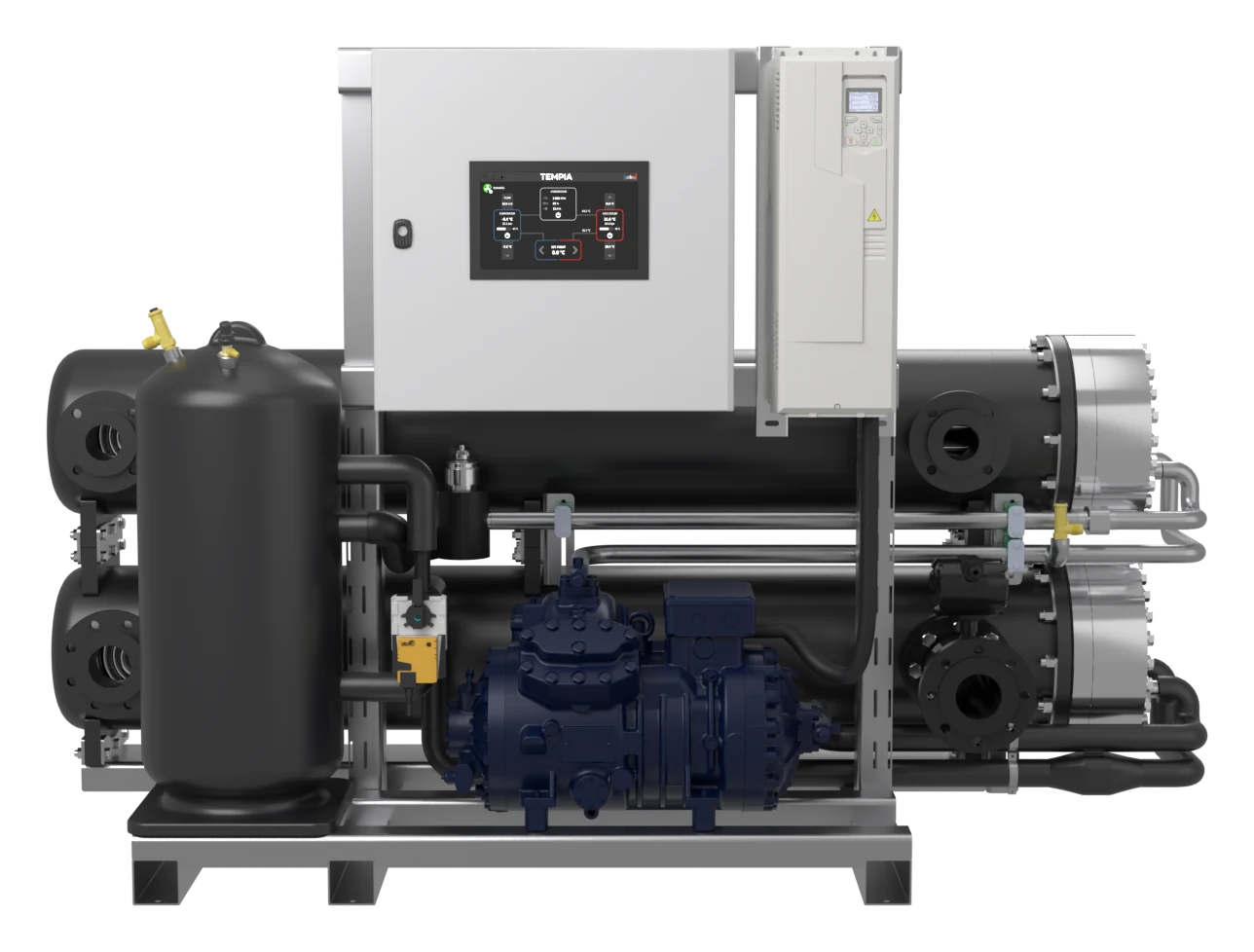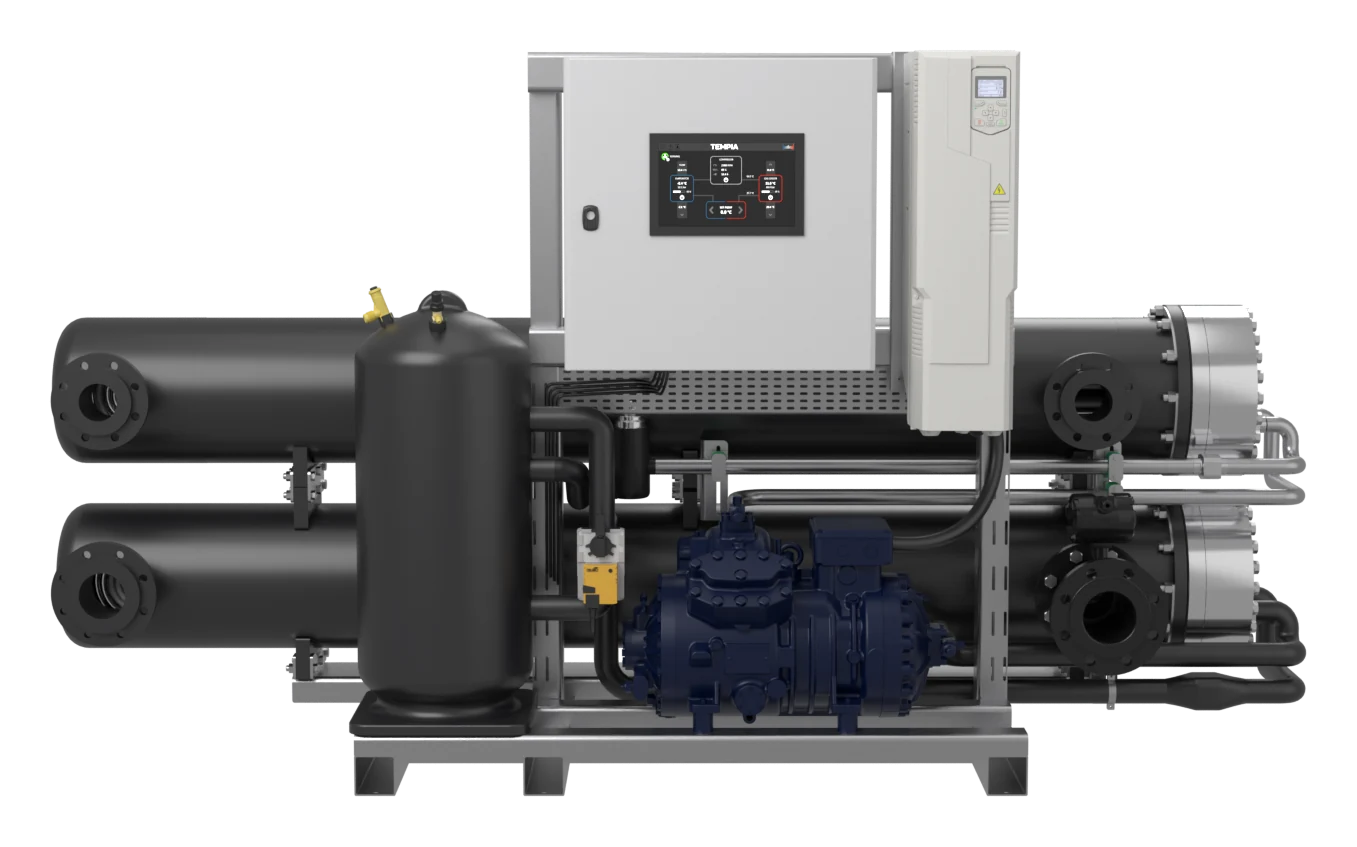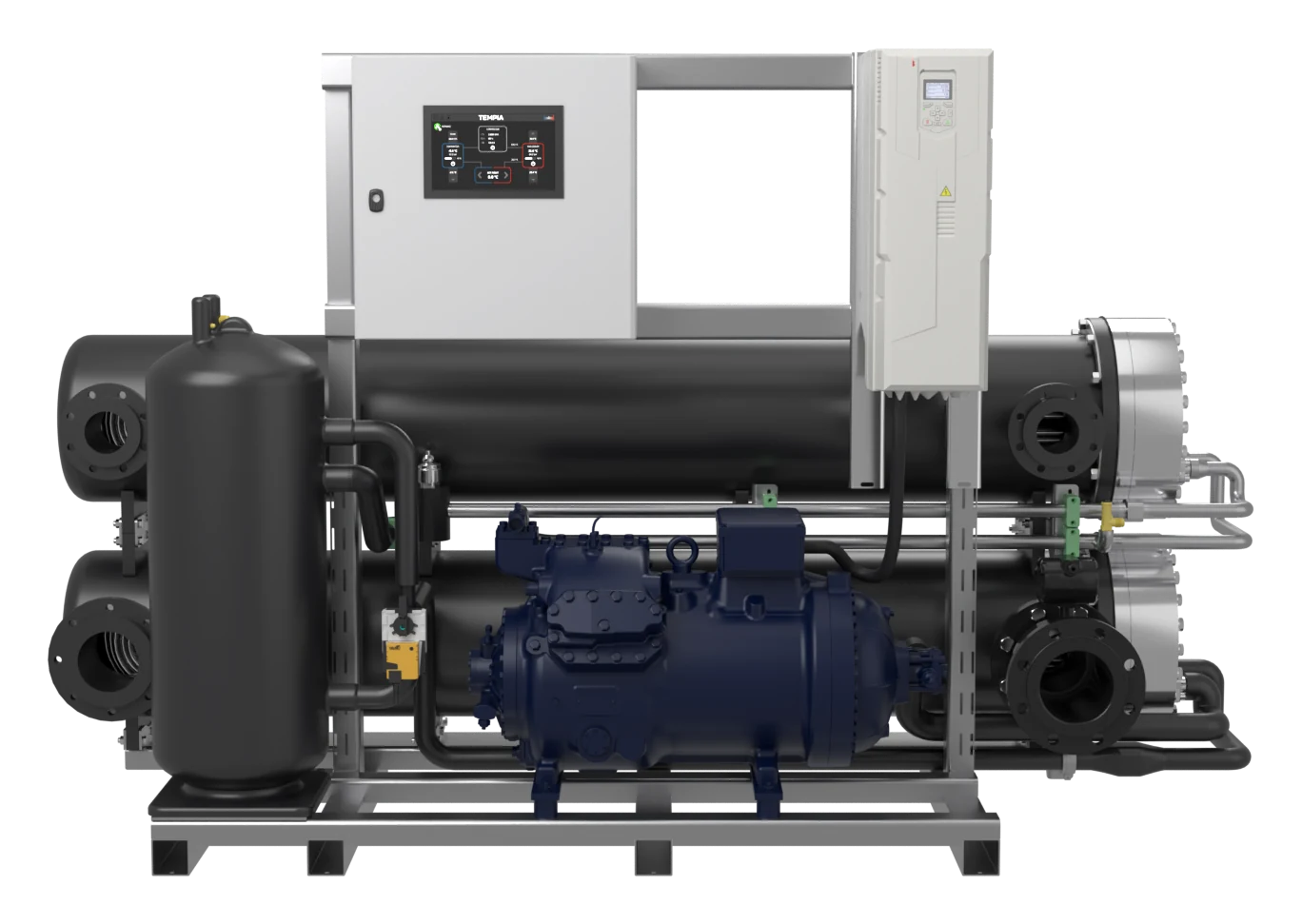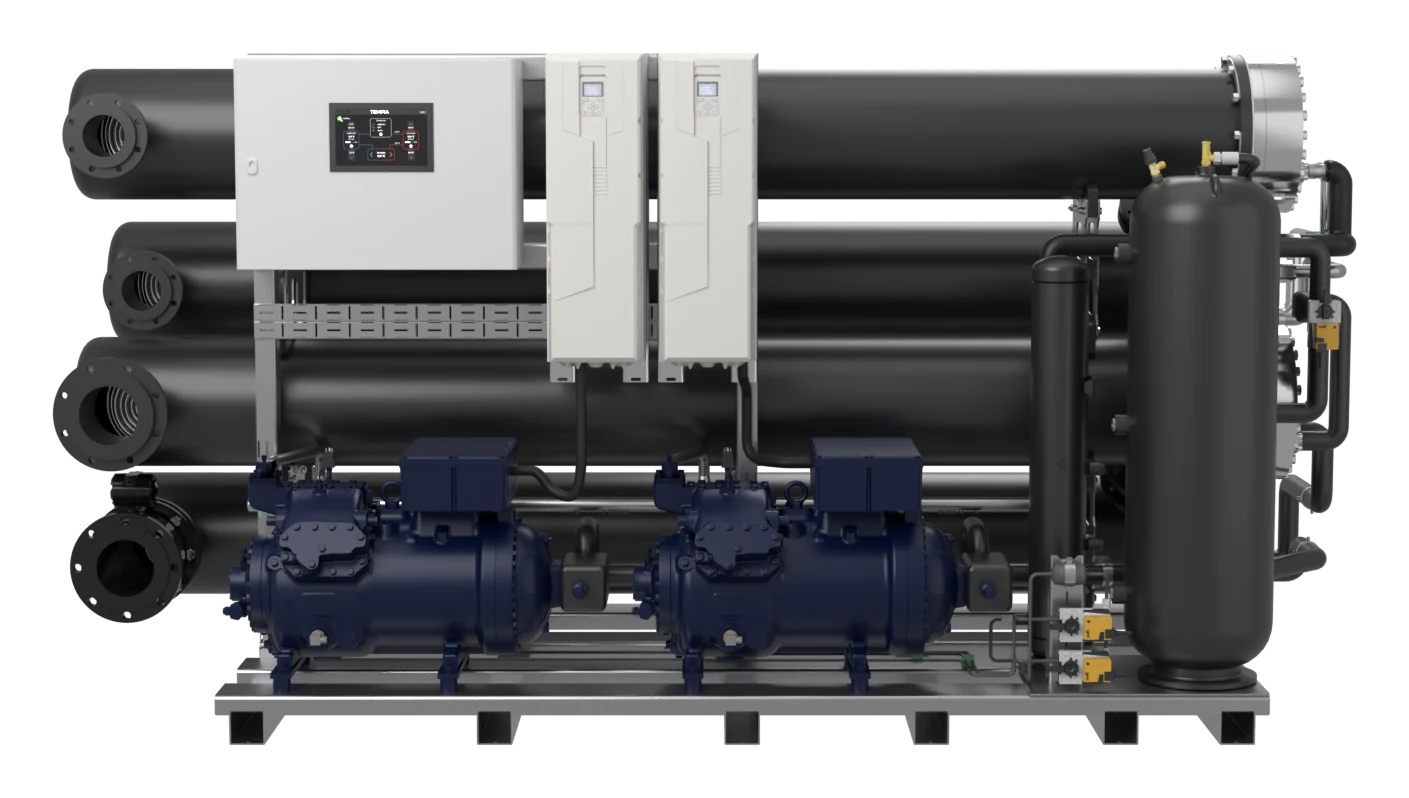
RSW systems built on CO₂ or ammonia, with titanium heat exchangers we design and build ourselves. Engineered and manufactured in Svolvær, in the middle of the fishery we build for.

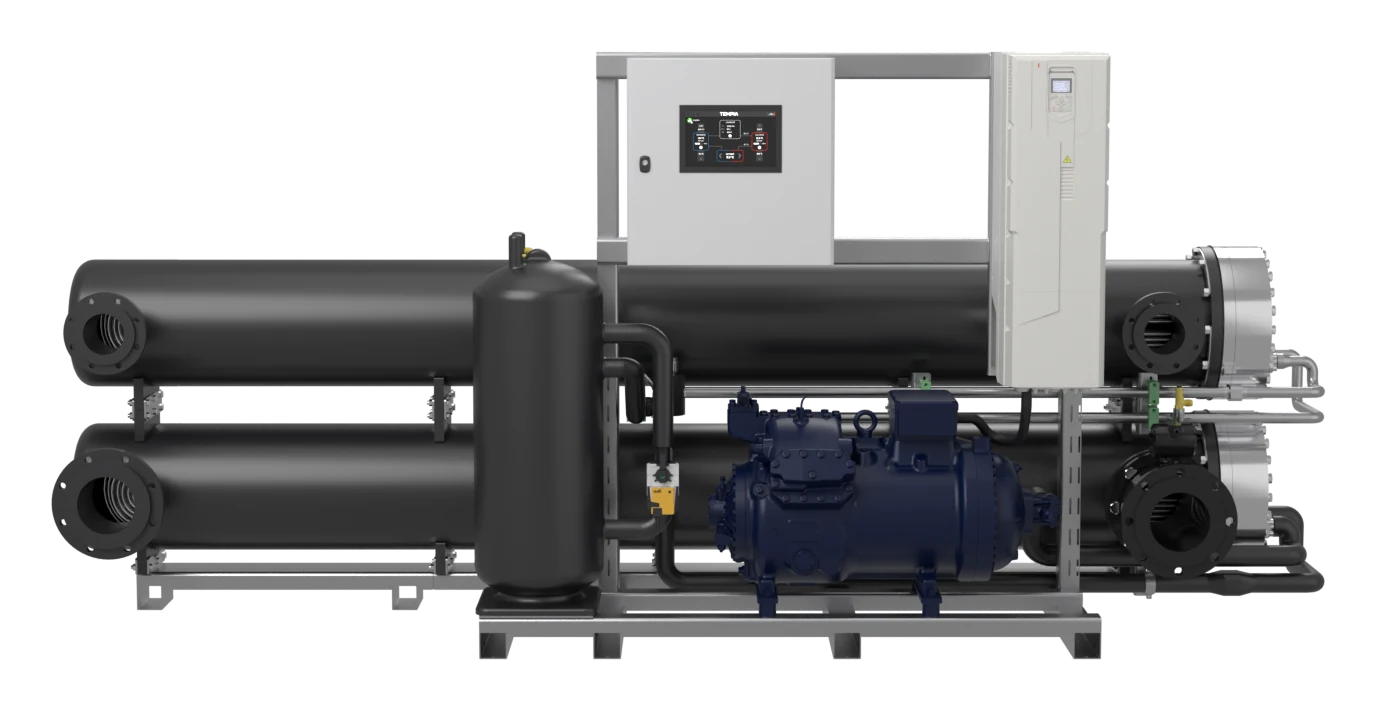
The next-generation RSW suits everything from smaller fishing vessels to larger processing plants. Exchangers with PE shell and titanium core, SS304 piping and frame, PLC-based HMI and more.
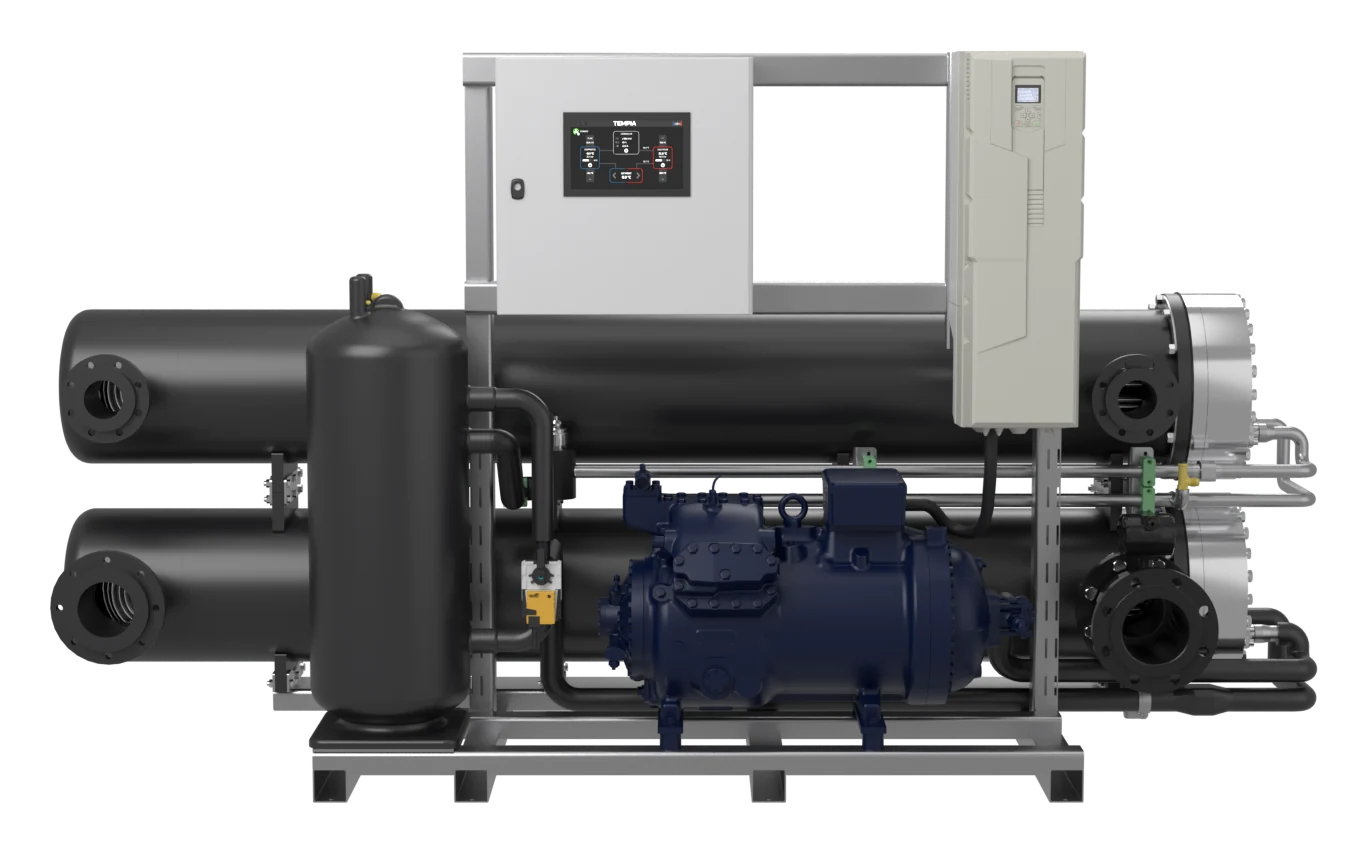
For larger vessels and wellboats with large tank volumes and demanding operation.
Nominal capacity at the data sheet’s stated conditions: arctic at 16 °C sea water, tropical at 28 °C, tank +0.2 / −1 °C. Actual performance depends on the operating case. Temperature setting −1 °C to +40 °C, all sizes.
A refrigerated sea water system takes the temperature out of the catch while it is still in the tank, not after it reaches the receiving plant. Chilled water surrounds every fish evenly, so the catch is cooled through rather than cooled on the surface.
Our RSW systems run on a PLC-based HMI with integrated flow measurement, and they can be run together with our own valve control. Temperature, flow and plant status are read from one screen instead of being pieced together from separate panels. For the crew that removes guesswork in the middle of a busy haul. For the owner it means the plant reports what it is doing, and the same picture is in front of the technician when one is brought aboard. The control system is developed in house, alongside the plant it runs.
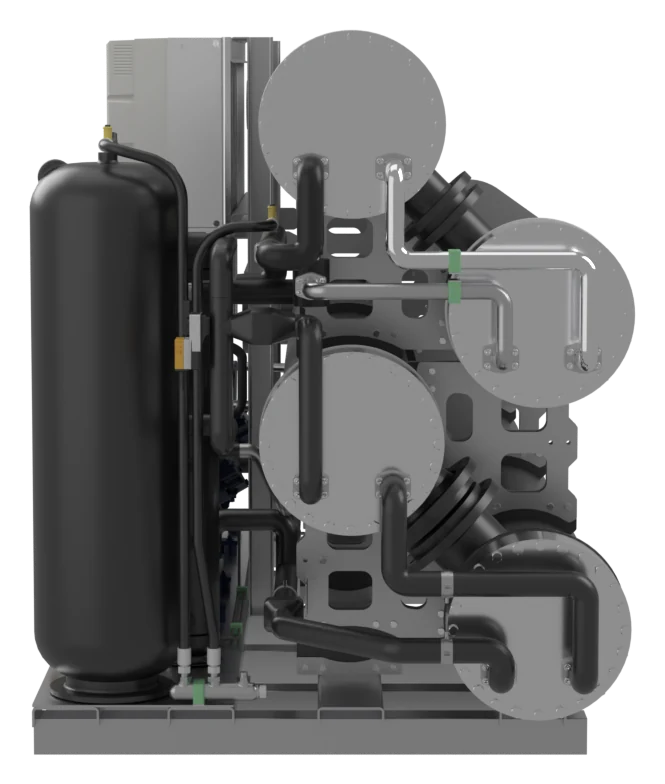
Sea water is the hardest medium a refrigeration plant can be asked to handle. We develop and build our titanium heat exchangers ourselves, and that is also why the package can be compact — on board, space is the scarcest thing you own. Because the core component is designed and made by us, it is documented by us. When something has to be checked, changed or sourced years from now, the same company answers.
We build on CO₂ because it behaves well on board. It is not toxic, and it does not require fire-rated EX rooms, which changes both where the plant can be placed and how the installation is approved. It is a natural refrigerant rather than an F-gas with a phase-down attached to it, so the investment is not tied to something the fleet will have to leave behind. CO₂ is also well suited to heat recovery, so raise it early if the vessel has a use for the heat.
We deliver RSW in two refrigerant routes: CO2PRO™ RSW NG built on CO₂, and NH3PRO™ RSW built on ammonia. Which one fits depends on the vessel or plant, the machinery space you have, the operating pattern, and what your crew and yard are set up to run. We build both, and cascade plants that combine them. So the recommendation you get is not a preference for one product line — it is the one you can live with for the whole life of the plant. Indicative capacities for CO2PRO™ RSW NG reach 600 kW.
An RSW plant that stops does not cost you a service call. It costs you the catch. We develop, manufacture and commission our own systems for vessels, receiving plants, aquaculture and RAS facilities, so the people who answer recognise the plant, and the parts come from the company that built it.
We do not publish prices, for one reason: every RSW delivery is dimensioned for a specific hull, tank volume, catch pattern and machinery space, so a list price would be a number about someone else's vessel. Send us what you have — tank volumes, operating pattern, available space, and drawings if they exist — and we come back with an indicative capacity and a scope you can actually evaluate. All performance figures are indicative until they are confirmed against your operating case. Yards, integrators and distributors use the same contact point and reach the same people. Call +47 975 34 147 or write to post@tempia.no.